


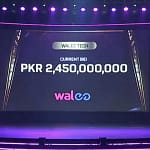
PSL franchise Multan Sultans sold for record Rs2.45bn; new owner says name will be changed to Rawalpindi
February 9, 2026
Non-bailable arrest warrant issued for KP CM Afridi in Peca case
February 10, 2026
Pakistan Cricket Board (PCB) Chairman Mohsin Naqvi on Tuesday said in the context of his recent engagements with Bangladesh Cricket Board (BCB) and International Cricket Council (ICC) officials that the purpose was to “get respect for Bangladesh”.
Naqvi said this while speaking to the media in Peshawar, a day after the government announced it was withdrawing its decision to boycott the group-stage match against India in the T20 World Cup, scheduled for February 15.
The development followed protracted negotiations between the ICC, the cricket boards of Pakistan and Bangladesh, consultations among national leaders and interventions by friendly nations such as Sri Lanka and the United Arab Emirates.
The now-withdrawn decision to boycott the match against arch-rival India was announced by the government on February 1 after Bangladesh were replaced by Scotland in the tournament, following their refusal to tour India over safety concerns in the wake of soured political relations between the Asian neighbours.
The matter was raised during Naqvi’s media talk in Peshawar on Tuesday, where he was asked about several conditions that were reportedly put forward during his meeting with the ICC and BCB officials on Sunday.
In his response, Naqvi said: “We did not discuss anything apart from Bangladesh; our only purpose was to get Bangladesh respect, to highlight the injustice done to them.
“And you saw that whatever demands Bangladesh made, they were accepted. That’s it.”
He added, “We had no personal interest in the meeting … our task was purely related to Bangladesh. The government made the decision on that [basis]. When their demands have been accepted, and it has been acknowledged that injustice was done to them, we are playing after that.”
The developments unfolded as the ongoing T20 World Cup, co-hosted by India and Sri Lanka, began on February 7. It was, however, overshadowed by an acrimonious political build-up after Bangladesh, who refused to play in India citing security concerns, were replaced by Scotland.
Bangladesh remained firm on not taking part in the event after the ICC rejected their request to move their matches to Sri Lanka.
After mulling its stance, Pakistan gave its cricket team the nod to participate in the World Cup, but said the Green Shirts would not play their match with arch-rivals India, scheduled to be held in Colombo.
In response to the development, even before the official communication from the PCB, the ICC, in a statement, said the position of “selective participation is difficult to reconcile with the fundamental premise of a global sporting event where all qualified teams are expected to compete on equal terms per the event schedule”.
It expressed the hope that the PCB would consider the significant and long-term implications for cricket in its own country. Subsequently, it was reported last week that the ICC had initiated back-channel efforts to resolve the issue and avoid significant financial losses.
Sri Lanka’s cricket board had also asked Pakistan to reconsider the decision to boycott the match with India.
Meanwhile, skipper Salman Agha stated that if Pakistan were to face India in a semi-final or final, they would again consult the government.
On Sunday, the BCB chief and ICC Deputy Chair Imran Khawaja landed in Lahore and held a long meeting with Naqvi.
A day later, Sri Lankan President Dissanayake also urged Pakistan to play its T20 World Cup clash against India in a phone call with Prime Minister Shehbaz Sharif. Meanwhile, BCB President Aminul Islam urged Pakistan to play the match against India.
The government then announced the withdrawal of its earlier decision to boycott the match against India while an ICC statement said “that no financial, sporting or administrative penalty will be imposed on Bangladesh Cricket Board”.
The statement also said that to compensate Dhaka, it was agreed that the country would host an ICC event prior to the ICC Men’s Cricket World Cup 2031.
