

The Ashes 2025-26: Australia on the Brink as Carey’s Century Anchors Day-Night Thriller in Adelaide
December 17, 2025
Kabul’s claim of denying militants safe haven called into question
December 18, 2025Judicial Turmoil in Pakistan: Justice Tariq Jahangiri’s Bombshell Accusations Against IHC Chief Justice Dogar
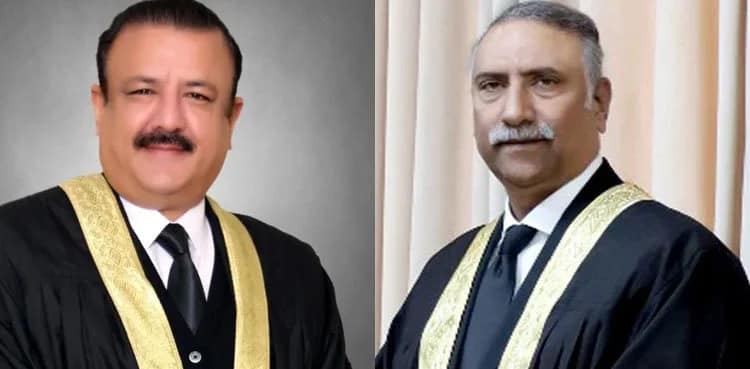
In a stunning escalation that has sent shockwaves through Pakistan’s legal corridors, Justice Tariq Mehmood Jahangiri of the Islamabad High Court (IHC) has accused Chief Justice Sardar Sarfraz Dogar of exerting undue pressure on him to resign. This allegation, lodged in a petition before the Federal Constitutional Court of Pakistan (FCCP) on December 17, 2025, comes amid an ongoing inquiry into Justice Jahangiri’s academic credentials and raises profound questions about judicial independence, internal pressures, and the integrity of Pakistan’s higher judiciary.
The petition details a purported conversation where CJ Dogar allegedly suggested resignation as a way out for Justice Jahangiri, even admitting to the judge’s “outstanding performance” but implying external influences at play. This claim not only challenges the authority of the IHC’s top judge but also spotlights the fraught dynamics within one of the country’s most influential courts, at a time when public trust in institutions is already fragile.
The Backdrop: A Saga of Scrutiny and Objections
Justice Jahangiri’s troubles trace back to allegations of possessing a fake law degree, which prompted the Supreme Judicial Council (SJC) to initiate proceedings against him earlier this year. The IHC, under CJ Dogar’s leadership, formed an inquiry committee to probe these claims, but Justice Jahangiri has consistently contested the process, arguing bias and procedural irregularities.
Just days ago, on December 16, 2025, the IHC dismissed Justice Jahangiri’s objections to a division bench headed by CJ Dogar, which was set to hear his case. Justice Jahangiri had expressed “no confidence” in the bench, citing a potential conflict of interest stemming from an earlier appeal by IHC judges – including himself – against CJ Dogar’s proposed transfer to another court. He argued that this history could compromise impartiality, but the court rebuffed his plea, stating he failed to provide valid legal grounds and emphasizing that prior rejections of similar petitions barred further challenges.
This pattern of dismissed objections – including two recent ones in the fake degree case – underscores a deepening rift. Justice Jahangiri’s latest move to the FCCP seeks not only to halt the IHC proceedings but also to declare them unconstitutional, alleging that the pressure to resign violates his rights and the principles of natural justice.
Implications for Judicial Independence
This controversy arrives at a precarious juncture for Pakistan’s judiciary, which has long navigated political turbulence, allegations of interference, and internal discord. The IHC, in particular, has been a flashpoint for high-profile cases involving political figures, human rights, and national security. Accusations of pressure from within the bench erode the facade of autonomy, potentially inviting greater external scrutiny or intervention.
Legal experts warn that if substantiated, these claims could trigger a broader SJC investigation into CJ Dogar himself, further destabilizing the court. Conversely, if dismissed as baseless, they might reinforce perceptions of Justice Jahangiri’s desperation amid the degree scandal. Either way, the episode highlights systemic issues: the opaque nature of judicial appointments, the vulnerability of judges to internal hierarchies, and the need for robust safeguards against coercion.
In a broader context, this mirrors past judicial crises in Pakistan – from the 2007 lawyers’ movement against military interference to more recent allegations of “bench-fixing” in sensitive cases. It serves as a reminder that the judiciary’s strength lies in its impartiality, and any perceived erosion could undermine public confidence in the rule of law.
A Call for Transparency and Reform
As the FCCP deliberates on Justice Jahangiri’s petition, all eyes are on how Pakistan’s legal fraternity responds. Will this lead to a thorough probe, or will it be swept under the rug as another internal squabble? Stakeholders, including bar associations and civil society, must demand transparency to prevent such allegations from becoming normalized.
Ultimately, this saga is not just about two judges; it’s about the soul of Pakistan’s judiciary. In an era of democratic backsliding and institutional challenges, protecting judicial independence is paramount. The nation watches closely – hoping for resolution that upholds justice, not personal vendettas.