


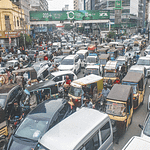
Conflicting road bodies, e-challan frenzy throw Karachi traffic in turmoil
December 1, 2025
Trump says US freeze on asylum decisions will last ‘a long time’
December 1, 2025
The ‘Pakistan Population Summit’ — a national dialogue on restoring balance and building sustainable futures — will open today in Islamabad to emphasise the need to recognise population planning as an investment in the country’s development.
Organised by DawnMedia, the two-day summit will bring together politicians, economists, development specialists, private sector leaders, and experts to develop a shared vision as the rising population continues to place pressure on health systems, food and water security, and employment.
Pakistan, with a population of over 241 million, is the fifth most populous country in the world, adding four to five million people every year. Its population growth rate of 2.40 per cent is the highest in South Asia. The rapid increase is outpacing employment opportunities, with official statistics showing the country will require 104m jobs by 2040. Pakistan will not be able to achieve Sustainable Development Goals (SDGs) by 2030 if the current trajectory of population growth does not slow down.
View the full agenda here.
The summit will feature twelve sessions that will discuss issues such as: restoring population balance by 2050; accelerating economic growth towards a more optimal balance; translating political resolve into action on the ‘tawazan’ narrative; regional reviews of population and economic growth; the human development crisis; heightened responsibility to restore the balance between the centre and the provinces; the ideology of population balance; population challenges in a highly urbanised Pakistan of 2050; empowering women and their choices; abilities of information ministries to influence Pakistan’s optimum population narrative; and reports of provinces in balancing population and economic growth.
The sessions will be chaired by Finance Minister Senator Muhammad Aurangzeb, Planning and Development Minister Ahsan Iqbal, Minister of State for National Health Services, Regulations and Coordination Dr Malik Mukhtar Ahmed Bharath, Information Minister Attaullah Tarar, National Commission on the Status of Women Chairperson Umm-e-Laila Azhar, and Karachi Mayor Murtaza Wahab. Provincial government leaders will also address various sessions.
British High Commissioner Jane Marriott and World Bank Country Director for Pakistan Dr Bolormaa Amgaabazar will speak during a session focused on accelerating economic growth towards a more optimal balance.
United Nations Population Fund (UNFPA) Country Representative Dr Luay Shabaneh will chair the session on the regional review of population and economic growth. Former senator Raza Rabbani will chair the session on human development crisis, which will feature a keynote address by former permanent representative of Pakistan to the United Nations Dr Maleeha Lodhi.
The rising population poses a challenge to sustainable development. In this backdrop, strong political commitment and effective governance on population policy are required to make population policy a national priority and integrate it across all development initiatives.
Development specialists have emphasised the need for investment in human capital, particularly in women and girls, who face stark educational disadvantages compared to men, with a significant gap in educational attainment across all levels of education.
There is a need to increase public financing up to 2 per cent of GDP and efficient spending for population planning throughout Pakistan. Revisiting the criteria of the National Finance Award has been emphasised since 84 per cent of the award is based on population size.
According to the Population Council, effective implementation of a population policy with the goal of achieving the Council of Common Interests (CCI) targets of a total fertility rate of 2.2 children per woman and lowering the population growth rate to 1.2pc per annum by 2030 would mean 50m fewer people by 2050.
